All ProjectsUX / Design Case Study

Selected Work / UX Design

Creative Discovery

Redesigning the client onboarding experience to simplify decision-making and streamline the creation of customized websites tailored to each client's needs and preferences.

Company

Martindale / Internet Brands

My Role

Senior UI/UX Designer

Discipline

UX Strategy & Design

Focus

Research & Problem Solving

Creative Discovery project showcase

Project Overview

Scroll to explore ↓

Chapter 01

Understanding the challenge

Understanding the problem.

The original website onboarding process allowed clients and sales representatives to select website themes primarily based on visual preferences, without fully considering the law firm's identity, practice areas, or functional requirements.

This often resulted in websites that didn't accurately represent the firm or support its specific needs. For example, attorneys seeking a bold, aggressive brand identity sometimes selected themes with soft color palettes that conflicted with their intended image. Larger firms with a vast number of practice areas selected themes that lacked the navigation and content structure needed to organize and display their services effectively.

These mismatches led to client dissatisfaction, additional time-consuming revisions, and feedback that the finished websites did not accurately reflect the firms they represented.

Chapter 02

Research & Discovery

Understanding the problem from every perspective.

I collaborated with sales representatives, project managers, and designers to understand recurring challenges in the existing website onboarding process, including misaligned client expectations, communication gaps, and website themes that failed to meet a firm's requirements.

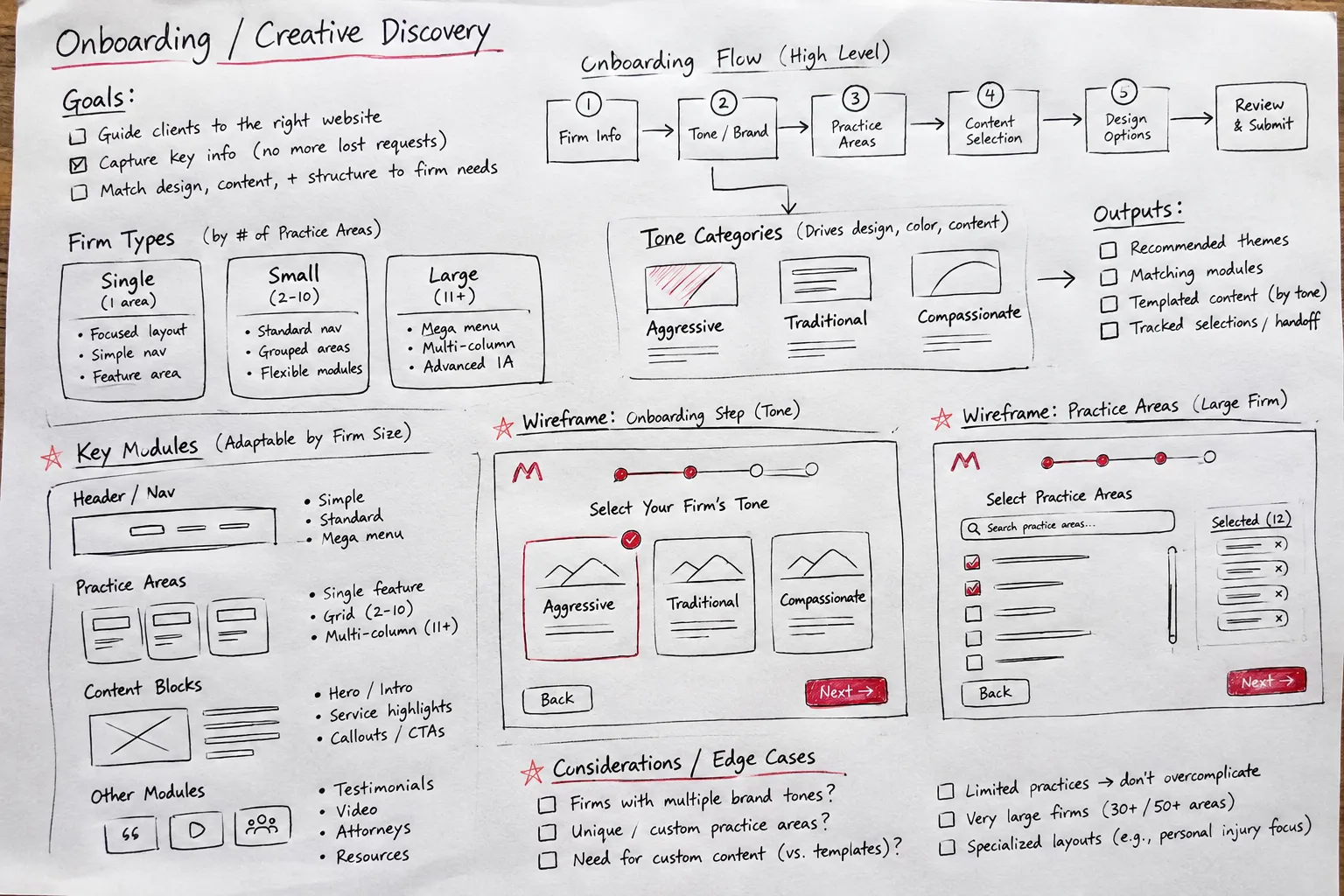
I researched the functional needs of different law firms and identified three primary categories based on their number of practice areas: Single, Small, and Large.

These findings established a foundation for matching website structure, navigation, and content presentation to each firm's actual needs.

Stakeholder research and law firm requirements
Research into firm requirements and recurring onboarding challenges.
Chapter 03

Planning & Strategy

Building a flexible system around client needs.

I mapped requirements and user scenarios for Single, Small, and Large firms, including edge cases that existing website themes couldn't adequately support.

I defined how navigation, page layouts, and content modules needed to adapt to different firm sizes, from solo practitioners highlighting one practice area to large firms organizing dozens of services.

I also planned a structured onboarding workflow that would capture client preferences and requirements directly, reducing reliance on manual communication between sales representatives, project managers, and designers.

Chapter 04

Design & Execution

Turning research into a personalized experience.

Translating research and planning into a guided onboarding experience and a flexible website design system.

04.01

Designing the onboarding experience

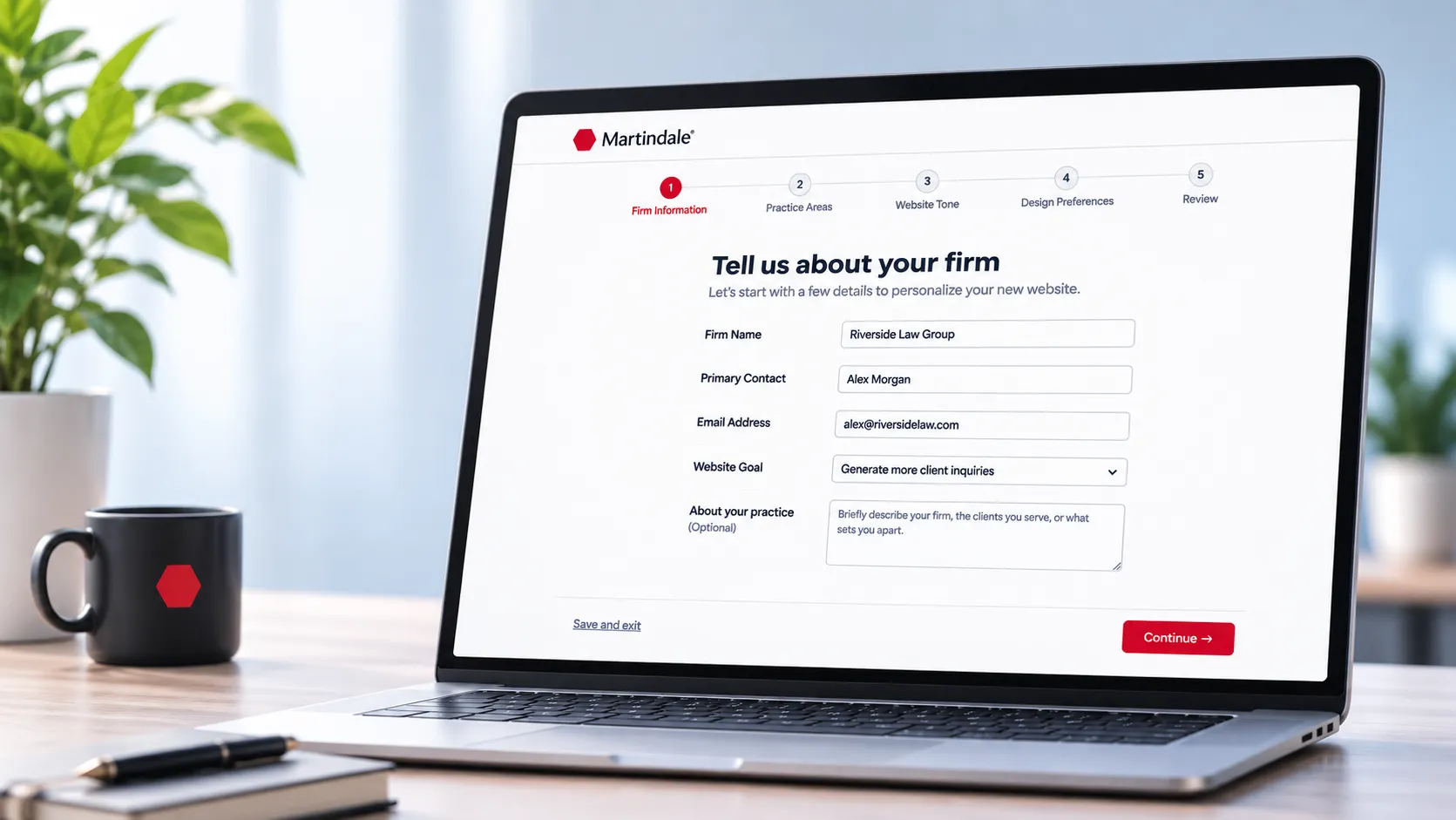
I created wireframes and interactive prototypes for a guided onboarding experience that captured client information, functional requirements, and brand preferences.

Clients progressed through a series of steps, including selecting a firm tone: Aggressive, Traditional, or Compassionate. This selection informed subsequent decisions about website themes, styling, and content.

04.02

Creating a modular design system

Working with the design team, we developed reusable website modules, including header variations, navigation systems, practice-area layouts, and content sections.

Each module could adapt to a firm's requirements, supporting everything from a single featured practice area to dozens of practice areas organized through mega menus and multi-column layouts.

04.03

Personalizing content and visual design

We collaborated with content writers to create reusable practice-area content in different tones, ensuring that the website's messaging aligned with the firm's selected identity.

The tone also informed visual styling. Aggressive themes used sharper edges and angular elements, Traditional themes emphasized established design patterns, and Compassionate themes featured softer shapes and rounded treatments.

04.04

Bringing everything together

The onboarding process connected client responses to a curated selection of website themes based on firm size, practice areas, functional requirements, and preferred tone.

By combining adaptable website modules, personalized content, and consistent visual styling, the system was designed to present clients with websites that better reflected their firm and supported their needs.

Chapter 05

Outcomes & Takeaways

The outcome and what I learned.

Project Results

Reduced the number of individual content decisions required and created a more consistent content-selection process.

Continue Exploring

Explore more of my work.

More projects focused on design, development, and solving real-world problems.

View All Projects